
Protecting Privacy in Photos and Videos: Practical Face Blurring Guide
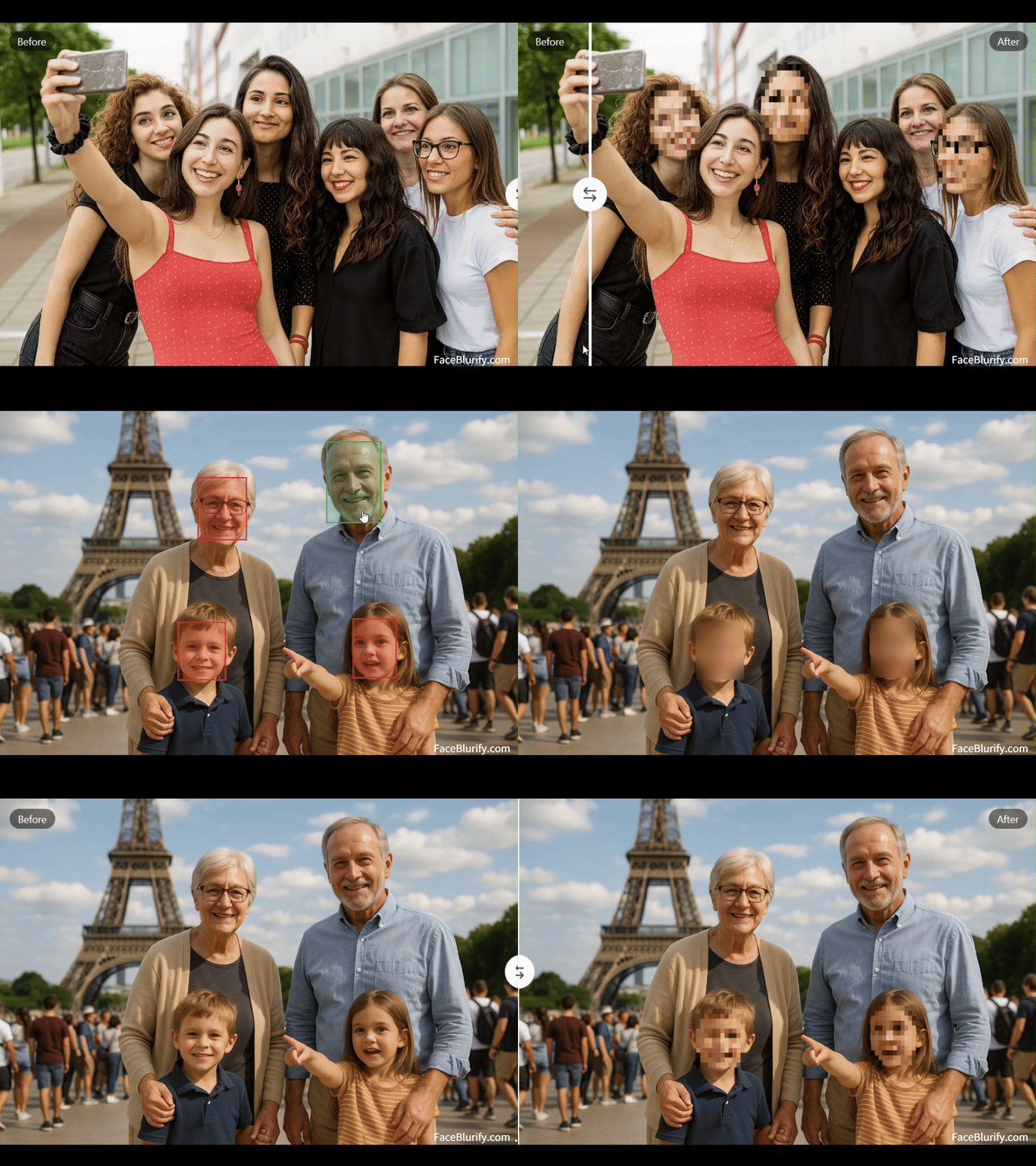
Privacy risk is rarely about one dramatic mistake. Most leaks happen because normal content gets posted without a final anonymization pass. A family vlog, a street interview, an event recap, or a customer story can expose faces that were never meant to be public.
Face blurring solves this with a repeatable workflow: upload, choose privacy method, review, publish. The key is consistency. If your process is simple, your team follows it every time.
Quick privacy workflow you can run in minutes
- Open the correct tool:
- Photos: /en/tools/blur-faces-photos/
- Videos (all faces): /en/tools/blur-faces-videos/
- Videos (full body): /en/tools/blur-fullbody-videos/
- Upload your media.
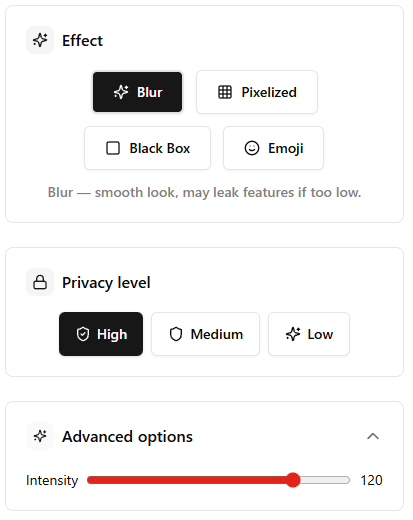
- Pick the effect:
- Pixelized for strong anonymity.
- Blur for softer visual style.
- Black Box for maximum visual certainty.
- For videos, decide whether to keep original audio.
- Process and review frame-by-frame sensitive moments.
- Download and keep only the anonymized export for publishing.
Choosing the right privacy level
For most public publishing, use a strong effect first, then reduce intensity only if readability suffers.
- High-risk scenes (crowds, minors, street footage): use stronger pixelation or black box.
- Corporate content (internal review, demos): blur can be enough if identity is still clearly obscured.
- Mixed footage: use selective mode to keep speakers visible while blurring bystanders.
Face blur vs full-body anonymization
Face blur is usually enough when people are front-facing and camera distance is close. Full-body anonymization is safer when identity could still be inferred from body shape, clothing, or movement.
Use full-body mode when:
- The camera is far from subjects.
- Faces are partially visible or turned away.
- You need stricter anonymity for compliance-sensitive footage.
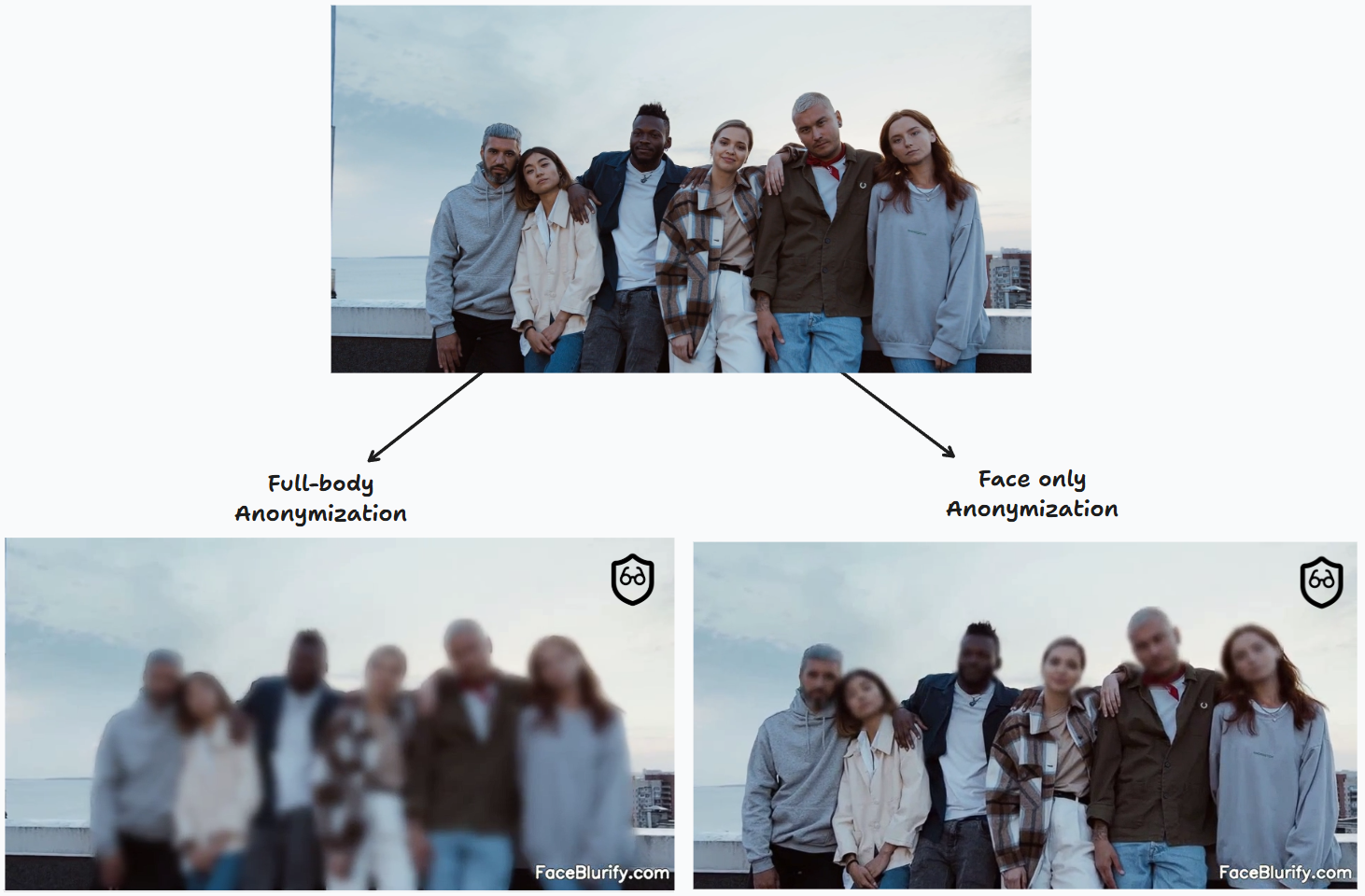
See the full comparison: Face blur vs full-body anonymization.
Team checklist before publishing
Run this as a final gate:
- No unblurred faces in intro/outro frames.
- No reflection leaks (mirrors, glass, windows).
- No visible children if policy requires anonymization.
- Audio policy reviewed (muted, kept, or edited).
- Export filename and share link do not expose personal info.
Common mistakes and quick fixes
Mistake 1: one missed face in a fast scene
Fix: re-run with selective workflow and tighter analysis settings.
Mistake 2: effect looks too weak after compression
Fix: increase intensity and test with your target platform compression.
Mistake 3: anonymity is needed beyond faces
Fix: switch to full-body anonymization mode.
Related guides
FAQ
Is face blurring enough for privacy?
It depends on scene risk. For close-up interviews, yes in many cases. For distant or complex scenes, consider full-body anonymization.
Can I keep the original audio?
Yes. In video mode, you can preserve original sound while anonymizing visuals.
Is this legal advice for GDPR or compliance?
No. This is a practical workflow guide. Always validate final policy with your legal/compliance team.
What is the fastest way to start?
Use blur-all mode first, then move to selective mode when you need person-by-person control.
When privacy is part of your publishing routine, anonymization becomes fast, predictable, and much safer.