
How to Blur License Plates in Dashcam Footage (Manual Zones Workflow)
2/19/2026
Updated on 2/21/2026
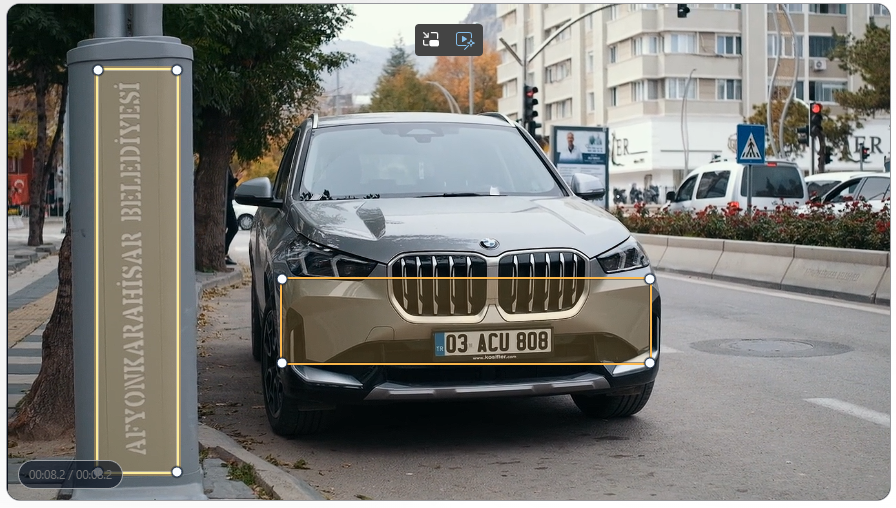
Plate detection is useful, but a manual-zone workflow is often faster and more reliable for varied camera angles, motion blur, and low light. If your goal is fast redaction in dashcam footage, manual zones are a practical method.
Use the video tool and switch to Zones only: /en/tools/blur-faces-videos/
Step-by-step plate redaction flow
- Upload your dashcam clip.
- Choose Zones only.
- Set clip trim range to the segment that needs redaction.
- Draw a box or ellipse over the plate area.
- Process and review moving scenes frame-by-frame.
- Add additional zones for mirrors, badges, or on-screen IDs.
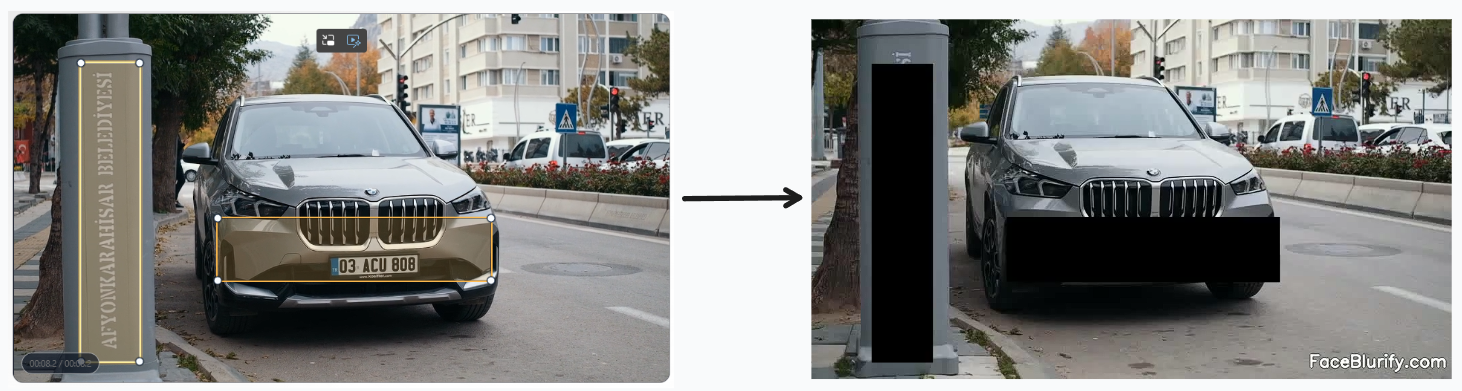
What manual zones are best for
- License plates.
- Vehicle stickers and identifiers.
- Employee badges.
- Device screens and documents captured in-frame.
Zone strategy for moving plates
Dashcam clips often have motion blur and perspective changes. A few practical tactics:
- Make the zone slightly larger than the plate to handle jitter.
- Add a second zone for reflections (rear window, side mirrors).
- If a plate appears only in a short window, trim and process only that segment.
Tips for better results
- Keep zones slightly larger than the exact object.
- Add extra zones for common motion direction.
- Split long clips into shorter segments when traffic density changes.
Combine with face anonymization when needed
If people are visible, combine selective faces with zones for complete privacy coverage.
Quick review checklist
- Scrub frame-by-frame around turns, braking, and camera shake.
- Check the first and last frames of your trimmed range.
- Verify the export looks correct after platform compression.
Related guides
- Blur faces only in part of a video
- Selective blur workflow
- Video anonymization best practices
- Detection missed someone? fixes
FAQ
Can I use zones without face detection?
Yes. Zones-only workflow does not require identity analysis.
Should I use box or ellipse?
Box is faster for plates and screens. Ellipse is useful for rounded regions.
Is this workflow good for legal evidence handling?
It is useful operationally, but legal requirements vary by jurisdiction and process.